

Tina just left us a 5 star review
★★★★★
on Google
Threading vs. Waxing: Which Eyebrow Shaping Method Is Right for You ?
Eyebrows can change the way your entire face looks, even when the difference is subtle. A clean shape can make the eyes look more defined, while an uneven or overly thin brow can throw off the balance of your features. The tricky part is choosing the right way to get that shape. Threading and waxing are both common eyebrow hair removal methods, but they work differently and can feel very different on the skin.
If you're trying to choose between the two, there's no single right answer for everybody. Your skin type, hair growth, desired brow shape, sensitivity and how often you want to maintain your eyebrows all matter. Knowing the differences makes the choice a lot simpler.
How Eyebrow Threading Works
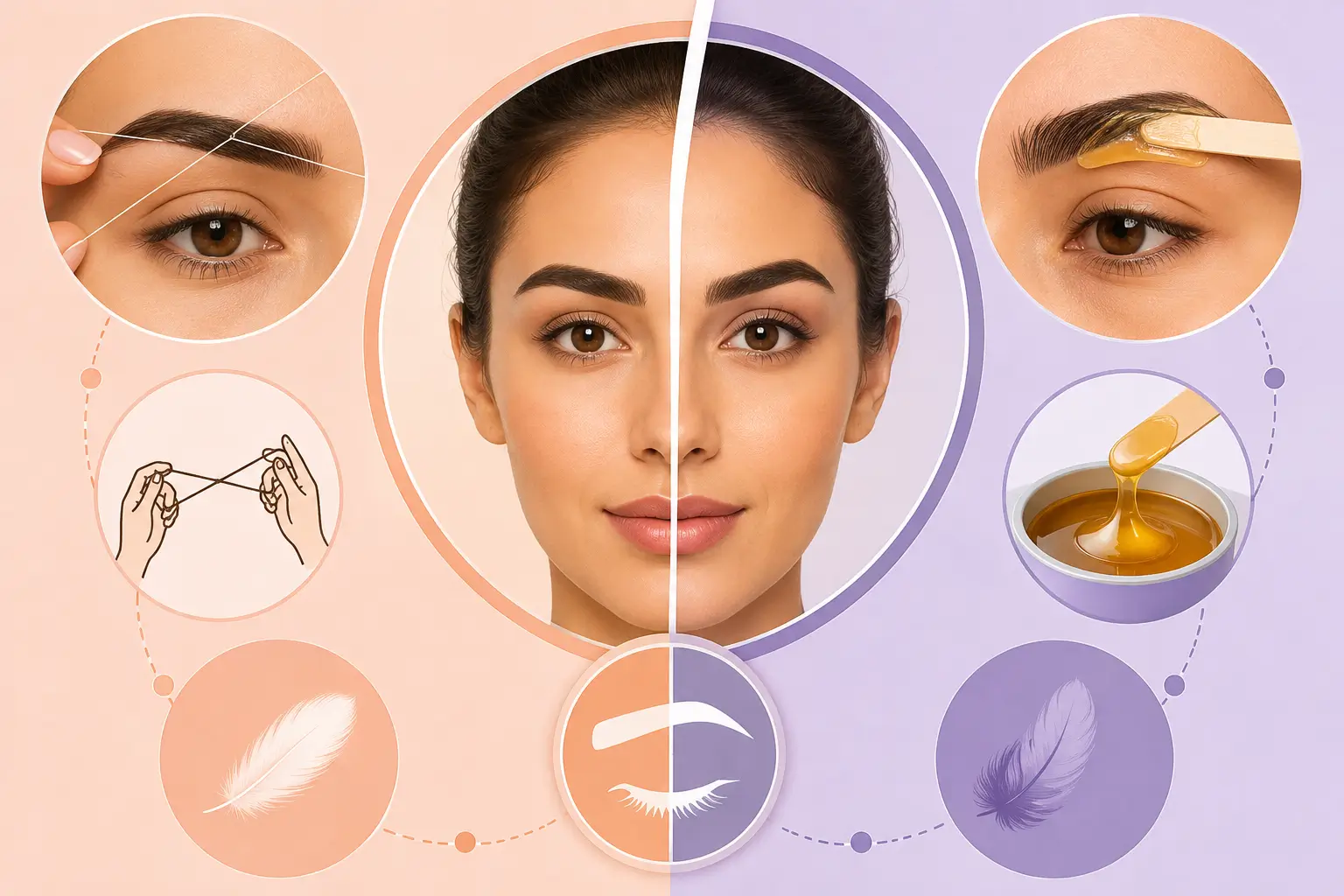
Threading uses a thin cotton or polyester thread that is twisted and rolled across the skin to catch individual hairs and remove them from the follicle.
Unlike waxing, threading does not require a product to be spread over the eyebrow area. The technician can work very precisely, which is one reason threading is often chosen when someone wants a specific brow shape rather than simply removing a larger area of hair.
An experienced technician can remove several hairs simultaneously while maintaining full control of the exact path the thread takes. This is especially useful around the eyebrows where even a small change can alter the overall shape.
Threading is also relatively quick. A typical eyebrow threading appointment can take only a few minutes, although the exact time depends on the amount of hair and the shape being created.
What Makes Blush Eyebrow Threading Different?
For people considering Blush Medi Spa eyebrow threading , the main advantage to look for is precision. Eyebrow shaping is not simply about taking away unwanted hair. The goal is to create a shape that works with the person's natural brow line and facial features.
Threading allows the technician to target individual hairs rather than removing everything within a broad waxed section. That can be helpful if you are growing your eyebrows out, trying to correct an uneven shape, or want to keep more of your natural fullness.
The technician can also make small adjustments as the service progresses. Instead of taking away a large section of hair at once, the shape can be refined gradually.
That matters because eyebrow mistakes are surprisingly noticeable. Removing one or two hairs may not seem important, but repeated over-removal can eventually change the appearance of the brows.
How Eyebrow Waxing Works
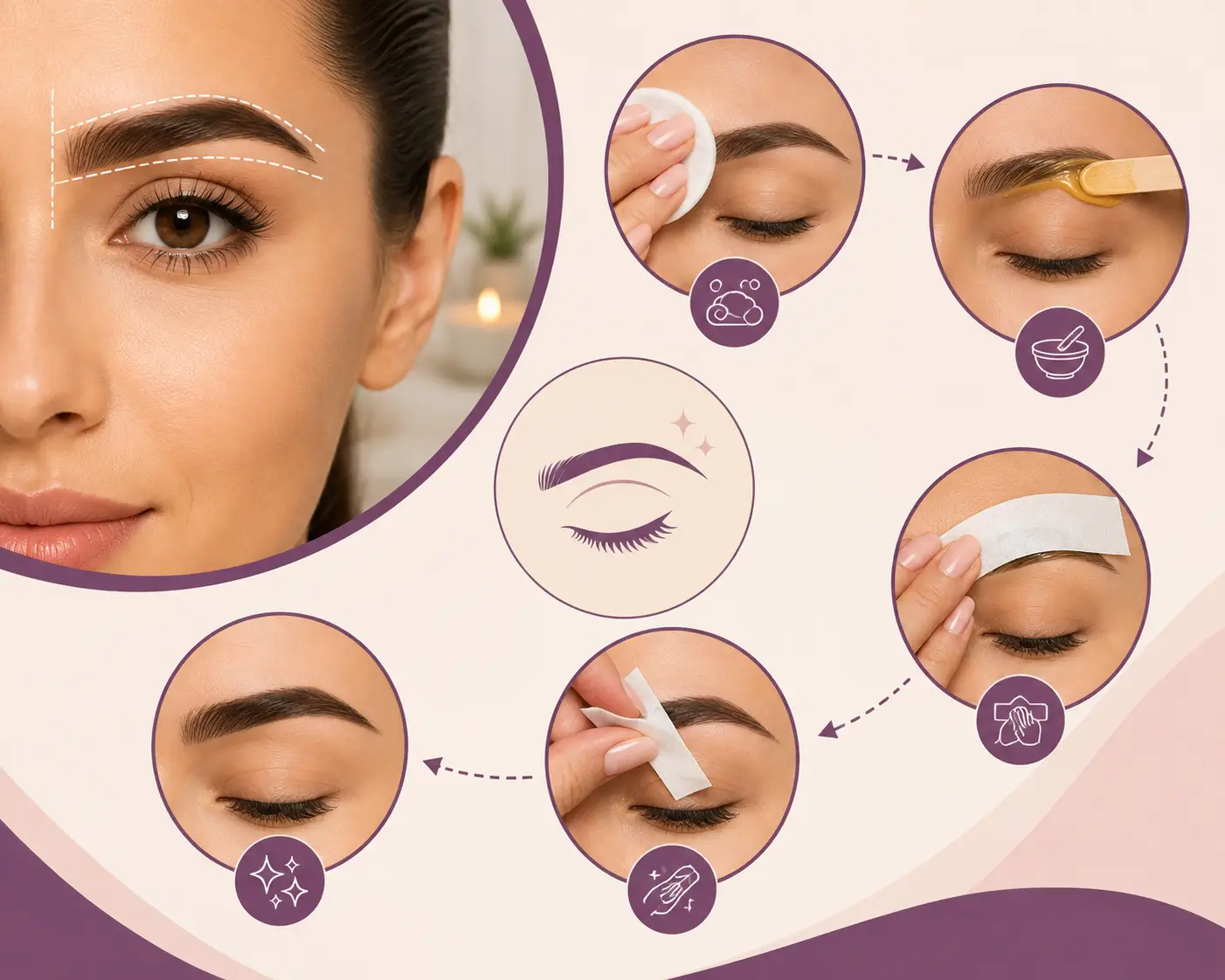
Waxing removes hair by applying warm or soft wax to the skin and allowing it to grip the unwanted hairs. The wax is then removed, pulling the hairs out from the roots.
For eyebrow shaping, waxing is generally used to clean up areas around the brow rather than to create every detail of the shape. It can remove multiple hairs at once, making the service fairly quick.
One reason people prefer waxing is the smooth feeling afterward. Since wax removes hair from the root and can also pick up some surface-level dead skin cells, the treated area may feel very smooth immediately after the appointment.
However, that same exfoliating effect can be a disadvantage for some people. The skin around the eyes is delicate, and not everyone reacts well to having wax applied and removed from the area.
Threading vs. Waxing at a Glance
The best method depends on what matters most to you. Here is a simple comparison:
| Factor | Threading | Waxing |
|---|---|---|
| Precision | Excellent for individual hairs | Good for broader cleanup |
| Skin contact | Thread touches the skin | Wax is applied directly |
| Hair removal | Removes hair from the root | Removes hair from the root |
| Speed | Usually very quick | Usually very quick |
| Sensitive skin | Often preferred by sensitive-skin clients | May cause temporary irritation |
| Exfoliation | Minimal | Can exfoliate the skin |
| Brow detailing | Very precise | Better suited to general shaping |
| Product used | Thread | Wax |
| Regrowth | Individual hairs may become noticeable as they grow | Regrowth can also vary by person |
| Aftercare | Usually simple | May require avoiding certain products temporarily |
Neither option automatically wins. The better choice depends on your skin and what you expect from the appointment.
Which Method Is Better for Sensitive Skin?
This is one of the biggest differences people consider when comparing threading and waxing.
Threading does not require wax, adhesive strips, or a chemical hair-removal product. For that reason, some people with easily irritated skin prefer threading.
That does not mean threading is completely irritation-free. The thread repeatedly moves across the skin, and some people may experience temporary redness after the service. Usually, this settles relatively quickly.
Waxing can create more noticeable short-term irritation because the wax is applied directly to the skin and then removed. Some people experience redness, sensitivity, small bumps, or discomfort afterward.
There is another consideration: certain skincare products and treatments can make the skin more vulnerable to waxing. If someone is using strong exfoliating products or has recently had certain facial treatments, waxing may not be appropriate.
If your skin is sensitive, it is worth telling the technician before the service rather than assuming one method will automatically be safe.
Which Method Gives Better Brow Precision?
For detailed eyebrow shaping, threading generally has an advantage.
A thread can target individual hairs in a controlled way. This is useful when the goal is to clean up the underside of the brow, refine the arch, remove a few stray hairs between the brows, or maintain a particular shape without taking away too much hair.
Waxing can still produce a clean and attractive result. It is especially useful when there is a larger amount of unwanted hair around the brows and the client prefers a quick cleanup.
The difference comes down to control.
If you are particular about exactly which hairs are removed, threading may feel more suitable. If you mainly want a clean outline and smooth skin around the brows, waxing may be enough.
Does Threading Hurt More Than Waxing?
There is no universal answer because pain tolerance varies.
Threading can feel like a series of quick pinches or small pulls as the thread catches the hairs. Some people find the sensation uncomfortable at first, while others become accustomed to it after a few appointments.
Waxing usually involves a brief pulling sensation when the wax is removed. For some clients, that feels more uncomfortable than threading. Others prefer waxing because the hair removal happens in larger sections and the appointment is over quickly.
The amount of discomfort can also depend on how coarse the hair is, how sensitive the skin is, and how experienced the technician is.
A good technique matters. Poor technique can make either service unnecessarily uncomfortable.
Threading vs. Waxing for Different Brow Goals
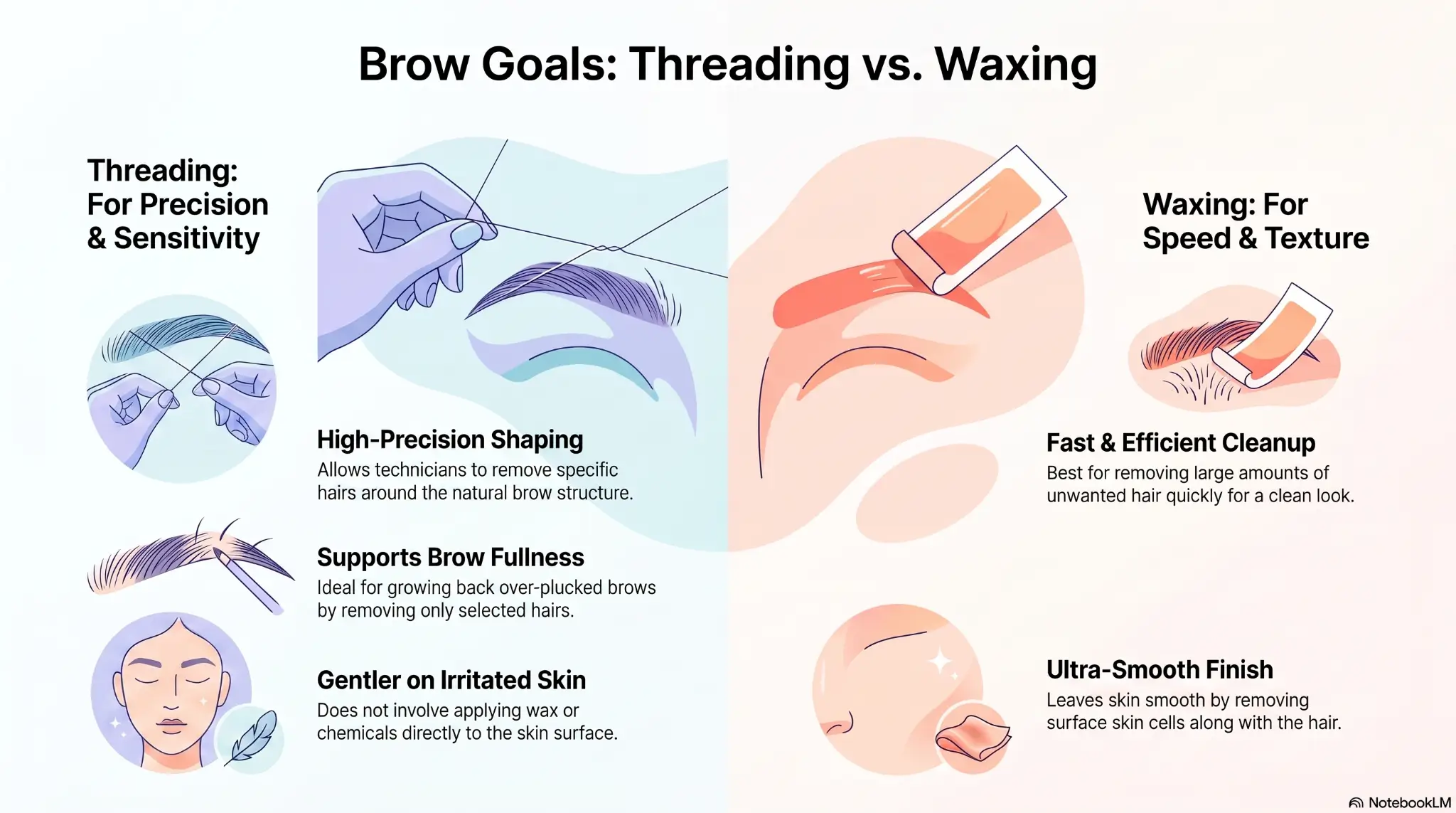
Your desired result should play a major role in the decision.
If You Want a Precise Shape
Threading is usually the stronger choice. It allows the technician to work carefully around the natural brow structure and remove specific hairs.
If You Want a Quick Cleanup
Both methods can work well. Waxing may be convenient when there is more unwanted hair around the brow and you want a smooth finish.
If You Want to Keep Your Brows Full
Threading can make it easier to remove only selected hairs. This can be helpful if you are trying to grow back over-plucked eyebrows.
If You Have Easily Irritated Skin
Threading may be worth considering because it does not involve applying wax directly to the skin. However, individual reactions vary, so your skin history still matters.
If You Prefer a Smooth Skin Finish
Waxing can leave the surrounding skin feeling particularly smooth because it removes surface skin cells along with the hair. That is not necessarily a benefit for everyone, especially people who are prone to irritation.
What About Eyebrow Threading in Sterling VA?
When looking for eyebrow threading Sterling VA, it helps to look beyond price and appointment availability.
Eyebrow shaping is a detail-oriented service. A technician's understanding of brow proportions, facial balance, hair growth patterns, and your personal preferences can affect the result more than a small difference in service cost.
Before booking, consider whether the salon clearly explains its eyebrow services and whether the technicians have experience with different brow shapes.
It is also worth communicating what you want. Saying "just clean them up" can mean different things to different people. If you want to keep your brows thick, maintain a soft arch, remove only the stray hairs, or make the brows more defined, explain that before the service begins.
For clients comparing blush eyebrow threading with other eyebrow-shaping options, the same principle applies: the service should be based on the brow you want to maintain, not simply how much hair can be removed.
How Long Does Threading Last Compared With Waxing?
Neither method permanently stops hair growth.
Both threading and waxing remove hair from the root, so the results generally last longer than shaving or trimming. How long the brows remain clean depends on your individual hair-growth cycle.
Some people notice regrowth within a couple of weeks, while others can go longer before their brows need attention.
The important thing is consistency. If you repeatedly remove the same unwanted hairs and maintain a similar shape, future appointments can become easier to manage.
Trying to completely reshape your eyebrows every few weeks is a different situation. That requires more planning because eyebrow hairs grow at different rates.
Does Waxing or Threading Make Hair Grow Back Thicker?
No. Neither threading nor waxing makes the hair follicle produce thicker hair.
What you see during regrowth can sometimes create that impression. Hair that is newly growing may look darker or more noticeable against the skin. Changes in hormones, age, medication, and genetics can also affect hair growth.
If your eyebrow hair seems different over time, the cause is unlikely to be simply that you switched between threading and waxing.
Which Method Is Easier to Maintain?
Maintenance depends more on your natural hair growth than the method itself.
Threading can be convenient for people who want small touch-ups because individual stray hairs can be removed without disturbing the entire brow shape.
Waxing can also be low-maintenance because larger areas can be cleaned quickly during an appointment.
If you are someone who likes to keep a very specific brow shape, regular maintenance is more important than choosing one method and expecting it to solve everything. Brows naturally change as hairs grow, shed, and respond to normal changes in the body.
What Should You Do Before an Eyebrow Appointment?
A little preparation can reduce unnecessary irritation.
Before threading or waxing:
- Avoid picking or scratching the brow area.
- Arrive with clean skin when possible.
- Tell the technician about recent facial treatments.
- Mention any products that may make your skin more sensitive.
- Explain how much brow hair you want to keep.
- Show a reference photo if you are trying to achieve a particular shape.
For waxing in particular, discuss your skincare routine if you use strong exfoliating products or treatments. Waxing over compromised skin can cause problems.
You should also avoid making major brow decisions immediately before an important event. Give your skin enough time to settle after hair removal, especially if you tend to develop redness.
What Should You Do After Threading or Waxing?
After either service, keep the area relatively simple for a while.
Avoid aggressively rubbing or scratching the skin. If the area is temporarily red after threading, a cool compress may help calm it.
After waxing, it is particularly sensible to avoid unnecessary heat, heavy sweating, harsh exfoliation, and strong skincare products around the treated area for a short period, especially if your skin is sensitive.
Your technician may give you specific aftercare instructions based on your skin and the service performed. Those instructions should take priority over generic advice.
So, Which Is Better: Threading or Waxing?
For many, the answer is down to precision versus broad cleanup.
Threading is a good option if you want precise eyebrow shaping, like pulling individual hairs, or are concerned about getting wax directly on sensitive skin.
Waxing can make sense if you want fast hair removal across a broader area and like the smooth feeling that waxing can leave behind.
Neither method is inherently better for every person. Your skin, brow density, desired shape, and previous experience should guide the decision.
If you're still not sure, start with the method that best addresses your biggest concern. If you're interested in precise shaping, you might want to try threading first. Somebody who wants a quick clean up and smooth skin around it may prefer waxing.
Conclusion
Both waxing and threading can give you nice shaped, clean looking eyebrows. The real difference is the way they remove the hair, and how much control you have over the process.
For those who like precision and want to work closely with their natural brow shape, threading is often a good option. Waxing is a practical option for a quick cleanup and a smooth finish.
For those who desire their eyebrows shaped with precision, threading might be a better choice, as the technician can focus on individual hairs. Waxing may be more convenient for quickly removing larger areas of unwanted hair. It's all about your skin sensitivity, brow goals and your own personal preference.
Threading may be suitable for sensitive skin because it does not involve applying wax directly to the skin. However, threading can still cause temporary redness or irritation. If your skin is highly sensitive or recently treated, tell your technician before the appointment.
Threading and waxing both pull hair out from the root, so results can last you a few weeks, depending on your individual hair growth. There is no same time fixed for everybody. Genetics, hormones, hair-growth patterns and how you take care of your hair all influence how fast regrowth is noticeable.
Generally, threading won't damage healthy skin if done correctly by a trained professional. This can cause temporary redness as the thread is dragged repeatedly over the skin. Chronic irritation is not normal and needs to be checked by a health provider.
Yes. You can switch between threading and waxing, although your skin may respond differently to each method. If you have recently used strong exfoliating skincare, had a facial treatment, or experienced irritation, mention it before waxing or threading.
Start with your number one priority. If precise hair removal and detailed brow shaping are most important to you, opt for threading. If you want fast removal over a larger area and a smooth finish around the brows, consider waxing. If you're unsure, talk to an experienced technician about your brow goals and skin sensitivity before you decide.


